Goodbye Clifford.


Clifford Malcolm Brown, the great canadian scholar, died on 14th January 2012. He spent his live researching about Isabella d'Este, Mantua and the Gonzaga family.  
* * *

Goodbye Clifford, 
your books have been a precious guide for our studies and researches.
We are keeping in our heart the memories of those two days we spent together in Mantua, with that dinner, during which we talked for hours and hours about our Isabella. Thanks for your friendship, and for the encouragement you gave to our studies. Your researches are a precious inheritance for all the scholars studying about Isabella d'Este. We'll remember you as a precise scholar with a generous spirit.
We are sure that you are now in a place, where you can meet our Isabella, asking her to dissolve those very few little doubts and mysteries, whom your studies had not solved yet. 
Please, forward our greetings to her.
And please, tell her we are friends.


A selected list of studies by Clifford M. Brown:

Per dare qualche splendore a la gloriosa città di Mantua. Documents for the Antiquarian Collection of Isabella d'Este

Isabella d'Este in the Ducal Palace in Mantua: An Overview of Her Rooms in the Castello di San Giorgio and the Corte Vecchia

Tapestries for the Courts of Federico II, Ercole and Ferrante Gonzaga, 1522-63

Engraved Gems: Survivals and Revivals. Studies in the History of Art


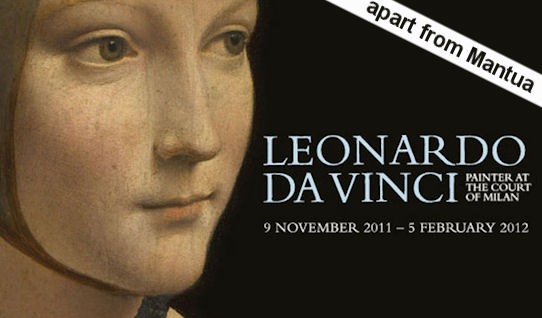
Leonardo da Vinci: 10 tips for visiting the exhibition in London (also without a booked ticket)


We had a break from our professional activities, and we spent some days in London, acting as tourists and not as guides. We have been able to visit the amazing exhibition "Leonardo da Vinci: Painter at the Court of Milan". Although all the bookable tickets are sold out since the very first day, we have been able to buy some of the 500 daily tickets sold by the National Gallery.
VisitMantua is now happy to share with its readers these ten tips, to help you in planning your visit (and your queue too) to this extraordinary exhibition.

1 -  Queue early.
Although the exhibition opens at 10am, the queue starts earlier. You should be at the gate about 7am.

2 - Find the right gate.
The exhibition is in the Sainsbury Wing, which has several entrances. The queue for the visitor without a booked ticket is at eastern gate. Let’s stand in the right line!

3 - Manage your resources.
Each person can purchase up to three tickets. If you are a small group, you should choose the most eligible members in resisting to the cold, or you can plan queuing shifts.

4 - Make it comfortable.
In the path of the queue, there are no benches or other seats (low walls, steps etc.). Bring a pillow inside a large plastic bag, so that you can sit on the floor and preserve your energies for the exhibition. You can then leave your pillow in the bag at the cloakroom.

5 - Have breakfast.
If you are queuing with other mates, shift with short breaks to drink something hot: there are several cafes in the area. In addition, about 8.30, the National Gallery will put a cart with hot drinks and pastries near the queue.

6 - Pass the time.
Have at your fingertips a book or a magazine. About mid-morning the staff of the National Gallery will provide you with the exhibition guide, with captions of all the paintings on show. And have a chat with the other people in the line: you are there for the same reason, so you surely have something in common.

7 - Check the time.
Daily tickets are issued with entry slots. So, although you have stayed in line all morning, you may have tickets for the afternoon. Check the admission time on the tickets, because you are not allowed to visit the exhibition prior to your turn.

8 - Recharge your energies.
If your ticket is for an afternoon entrance, take the opportunity to get some rest . You'll need almost two hours to visit the exhibition. So, avoid to do it tired both physically and mentally.

9 - Undress yourself.
Deposit coats, scarves, etc. in the cloakroom: the exhibition is very hot.

10 - Follow the order.
Watch the introductory video. Then move to the exhibition rooms following the numbers of the works on show. If you can not get close enough to read the captions, just remember they are all listed in the booklet they gave when you were still queuing. And - finally - remember that the last section of the exhibition, dedicated to the Last Supper, is located in another part of the Gallery. Follow the directions to get there and have on hand your ticket, you will be asked again for it.


And, least but not last... enjoy it!

Like a Virgil, seen for the very first time

 
No other writer has had the reputation of Virgil. The celebrated author of the Aeneid, the Eclogues and the Georgics has been chosen by Dante as a guide in his Divine Comedy. Equally Virgil had a great influence on Petrarch and Boccaccio, Ariosto and Thomas Eliot, just mentioning few of the dozens of poets and writers who has been fascinated by the Mantuan classical poet. During the middle ages he was thought to be a sort of prophet, magician, tutelary deity.

An exhibition in Palazzo Te investigates the fame and the phisical features of the latin poet.
A famous mosaic found in the 1896, in which Virgil is portrayed between two Muses, will show you the most ancient surviving portrait of the Poet. For the very first time this mosaic - lent by the Bardo Museum in Tunis - is exhibited out of Tunisia.

Starting from a testimony so ancient and unattainable, the exhibition is going to follow the portraiture of Virgil amongst the different centuries: illuminated manuscripts, coins from the middleages, XVI century woodcuts.  A special section is dedicated to the monument dedicated to the memory of Virgil by the council of Mantua in 1927. On show sketches by Giuseppe Menozzi, complemented by other projects designed by other famous artists of the early twentieth century, including Duilio Cambellotti.

VIRGILIO - Volti e immagini del poeta
Mantova, Palazzo Te, 16th October 2011 – 8th January 2012
 
Nessun altro scrittore ha goduto della fama di Virgilio. Il celebre autore di  Eneide, Bucoliche e Georgiche è stato scelto da Dante come guida nella sua Divina Commedia. Allo stesso tempo Virgilio ha esercitato una grande influenza su Petrarca e Boccaccio, Ariosto e Thomas Eliot, solo per citare alcuni fra i poeti e gli scrittori che sono rimasti affascinati dal poeta mantovano. Durante il Medio Evo, Virgilio è stato anche visto come una sorta di profeta, mago e nume tutelare.

Una mostra
a Palazzo Te indaga la fama e le caratteristiche fisiche del poeta latino.
Un
famoso mosaico rinvenuto nel 1896, in cui Virgilio è raffigurato tra due Muse, vi mostrerà il ritratto più antico sopravvissuto del Poeta. Per la prima volta questo mosaico - concesso in prestito dal Museo del Bardo di Tunisi - sarà esposto al difuori della Tunisia.

A partire da
una testimonianza così antica, la mostra seguirà la raffigurazione di Virgilio attraverso i diversi secoli: codici miniati, monete dal medio evo,  xilografie cinquecentesche. Una speciale sezione speciale sarà dedicata al monumento dedicato alla memoria di Virgilio dal Comune di Mantova nel 1927. I bozzetti originali di Giuseppe Menozzi saranno integrati da altri progetti disegnati da famosi artisti del primo Novecento, tra cui Duilio Cambellotti.

VIRGILIO
- Volti e Immagini del poeta
Mantova,
Palazzo Te, 16 ottobre 2011 - 8 Gennaio 2012
 

Mantegna's self portrait in the 'Camera degli Sposi'


Did you know? A self portrait of Mantegna is hidden in the frescoes of the Camera degli Sposi (a.k.a. Camera Picta and Bridal Chamber)... the painter had been paied to portray the Gonzaga family, but he was not able to resist the temptation to portray also himself in his stunning masterpiece. So he decided to hide his own portrait in one of the painted trompe-l'oeil friezes on the pillars... when visiting the Camera degli Sposi don't miss this detail!
Want to know more? Contact us and discover through our professional services the people, the stories and the art, who made Mantua one of the capitals of the Renaissance.


Mantua: SEX and the RENAISSANCE CITY!


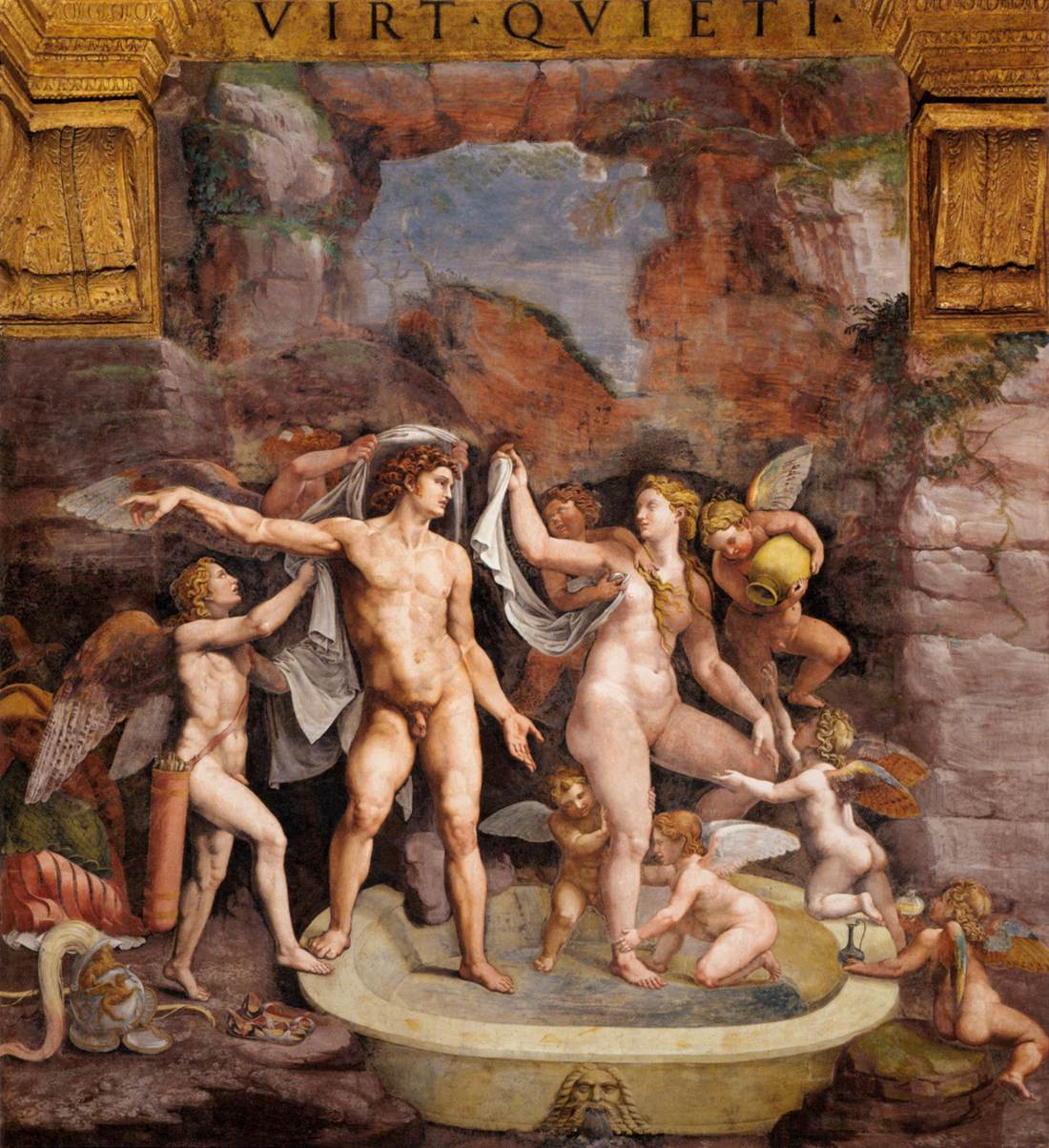
The blockbuster movie "Sex and the City" contains an accidental 'cameo appearance' of one of the frescoes by Giulio Romano, from Palazzo Te in Mantua. A detail of the "Bath of Mars and Venus", in fact, appears in the scene of the rehearsal dinner. The set of the movie scene is the restaurant Buddakan, in New York. In one of its rooms, a big replica of this fresco is hanging. You can recognize it behind Miranda, when Samantha tells her about the arrival of Steve.
Clearly, this is not an intentional homage: actually the replica of the fresco belongs to the forniture of the Buddakan. But, anyway, the sensual art of Giulio Romano has a strong connection with the sexy topics of "Sex and the City". And - sure - Giulio Romano would be very happy, knowing his works of art are still so sensual even after centuries!
VisitMantua offers you a privileged view of some of the most stunning nudes from the frescoes by Giulio... enjoy the show!


Il film campione d'incassi "Sex and the City", contiene un 'cammeo' di uno degli affreschi di Giulio Romano, da Palazzo Te, Mantova. Un particolare del "Bagno di Marte e Venere", infatti, appare nella scena della ‘Cena della prova’. La scena è ambientata nel ristorante Buddakan di New York, dove, in una delle stanze, è appesa una grande replica di questo affresco. La si può riconoscere dietro a Miranda, nella scena in cui Samantha la informa dell'arrivo di Steve.
Chiaramente non si tratta di omaggio intenzionale: la replica della affresco, infatti, fa parte degli usuali arredi del Buddakan. Ma, comunque, l'arte sensuale di Giulio Romano ha un forte legame con i temi piccanti di "Sex and the City". E - certo - Giulio sarebbe molto contento, nel sapere che le sue opere d'arte, anche dopo secoli, sono ancora così sensuali!
VisitMantua vi offre una vista privilegiata di alcuni dei nudi più belli dagli affreschi di Giulio ... godetevi lo spettacolo!

Mantua: one of the 100 Places In Italy Every Woman Should Go!

In the beginning was Goethe, and Goethe was travelling, and Goethe was travelling in Italy... then Carrie, Samantha, Charlotte and Miranda arrived. The girls are now around, travelling all around the world, and - sure - they are using this guidebook: "100 Places In Italy Every Woman Should Go" by Susan Van Allen. Hundreds of tips for women (and, why not, for men too, because Mr Big could be with them). Among this 100 must-to-see, Susan Van Allen suggests also the Ducal Palace of Mantua, and mostly the Isabella d'Este's private rooms:

"Of all the 500 rooms in the humongous Palazzo Ducale, the two teeniest, hidden away on the ground floor, are the most enchanting. They are the grotta and the studiolo of Isabella d’Este, aka First Lady of the Renaissance. Here’s where she’d come to leave the world behind and read the classics, play her lute, or have her friends over to marvel over the paintings, antiques, and gems she’d collected..."

When planning to pay a visit to Isabella's rooms, please be aware that they are not included in the usual visitor's route within the Ducal Palace of Mantua. Visitors wishing to see them may have to ask for special permission to see them. We will be happy to help you in getting this permission. 
Contact us and discover through our professional services these beautiful and fascinating rooms.

Visita Notturna al Palazzo Ducale di Mantova


Mantova, Palazzo Ducale: al calare della notte si accendono le luci sull'arte! In occasione dei "Martedì in Arte" il giorno 30 agosto sarà possibile visitare il Palazzo Ducale di Mantova di sera. Il Museo sarà aperto gratuitamente. VisitMantua vi offre l'opportunità di scoprire la reggia dei Gonzaga con una visita guidata a prezzo speciale: soli 5 euro a persona! Non perderte questa occasione: vedrete gli splendori dei Gonzaga rifulgere nelle tenebre della notte.


IL NUMERO DEI PARTECIPANTI è LIMITATO! Prenotatevi per assicurarvi la possibilità di partecipare alla visita guidata.
 
Per informazioni e prenotazioni contattate: visit.mantua@gmail.com
biblioteca@comune.cavriana.mn.it | tel 0376804053


Related Posts Plugin for WordPress, Blogger...